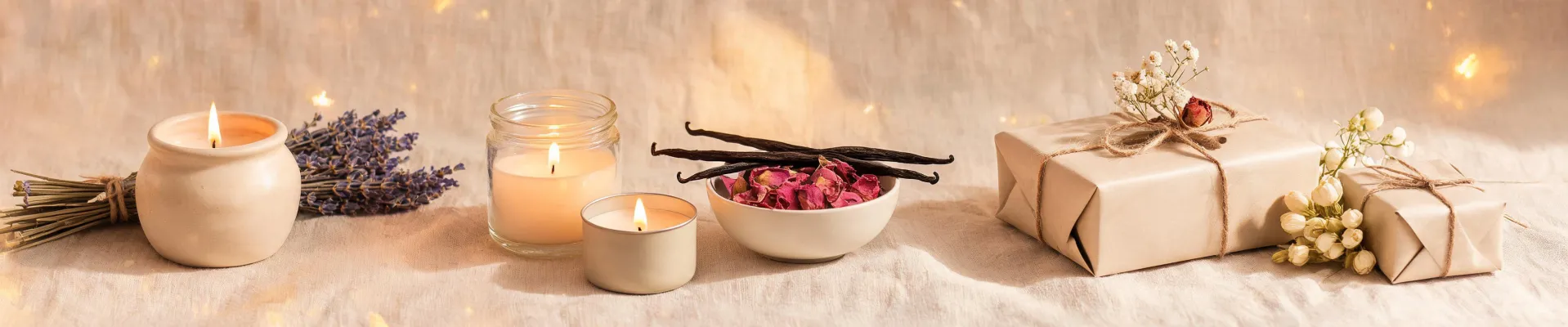
Ordering Yankee Candle for corporate and promotional gifts is the right call for most B2B clients. Melting their wax melts in a microwave is not. Those two conclusions cost me roughly $8,400 and two client relationships. If you're sourcing candles for client gifts, event favors, or employee appreciation, here's what I wish I'd known before my first bulk order in 2020.
I handle corporate gifting procurement for an events agency, and I've been doing it for over five years. In that time I've placed 60+ bulk orders of Yankee Candle products—large jar candles, votives, wax melts, car scents, and custom-branded bundles. I've also personally made and documented more than 20 significant mistakes, totaling roughly $8,400 in wasted budget. I maintain our team's sourcing checklist now, so new hires don't have to repeat my errors.
Can I Melt Hard Wax in the Microwave? Yes. Should I? No.
The short answer to the question that shows up in my inbox every few months: technically, hard wax melts in a microwave. Practically, don't. Especially if you're melting wax melts for a client demo, like I was.
In September 2022, a spa client requested a live demonstration of the Yankee Candle Sage & Citrus wax melts before committing to a 300-unit order. They wanted to verify the scent throw in a cold room. I figured the breakroom microwave would save the 15 minutes that a proper wax warmer would take.
Six minutes later, the glass container cracked, the fragrance had gone sharp and chemical, and the breakroom smelled like a candle factory fire. The client watched the whole thing happen. We lost the account. A lesson learned the hard way.
The technical reality: microwave heating is uneven. Wax superheats in spots, which degrades the fragrance oils and can create heat pockets that shatter containers. Yankee Candle's product care guidance points to electric warmers and hot plates—not microwaves—and every other wax melt brand I've checked gives the same instruction. On top of that, re-solidified microwaved wax turns grainy and loses most of its scent throw. I confirmed that twice more, because apparently I learn best by repeating my mistakes.
Why the Cheapest Candle Quote Is Rarely the Cheapest
In March 2023, I approved a generic candle brand to save $1.20 per unit on a 500-unit order. Checked the samples myself, signed the purchase order, shipped it out. On paper, we saved $600. Then 14% of the jars arrived cracked and another 9% had wicks that wouldn't stay lit. We caught the problem when a client's employee emailed a photo of a broken candle in a gift box—after we'd already distributed 200 units.
That $600 "saving" turned into a $3,900 problem: rush replacement shipping, expedited labor, and a credibility hit that no invoice line item captures. In my experience managing promotional product orders, the lowest quote has cost us more in at least 60% of cases.
Candles are a particularly bad place to cut corners because defects are impossible to hide. Cracks show. Weak scent throws disappoint immediately. Cheap wax melts have a visibly different texture and a weaker fragrance. The recipient sees the quality difference the moment they open the box, and they connect that impression to you, not the candle brand.
My stance is simple: unit price is the least informative number on any quote sheet. The real cost includes setup fees, shipping weight—large jar candles are heavy, and freight adds up quickly—replacement risk, and the price of giving something disappointing to a person you want to impress.
The Votive vs. Wax Melt Mix-Up
A mistake that sounds ridiculous in hindsight but happens more often than people admit: buying votives when you need wax melts, or the reverse.
In January 2024, I submitted a 200-unit order for Yankee Candle votives, assuming the client could use them in wax warmers at a wellness event. It looked fine on the spec sheet. The client unboxed everything, saw the wicks, and asked if I'd accidentally ordered candles. 200 items, $760, effectively useless for the event. That's when I learned to verify the physical format, not just the fragrance name.
The fix was embarrassingly simple: a two-column chart. "Has a wick" vs. "Does not have a wick." It's pinned in the team workspace and it's part of every new hire's onboarding.
Here's the product breakdown I send to clients now:
- Yankee Candle Sage & Citrus wax melts: wickless, designed for electric warmers, lighter to ship, ideal for sample packs and spa or wellness brands.
- Votive candles: small, wick-based, roughly 15 hours of burn time, best for hospitality settings like hotel rooms or welcome tables.
- Large Yankee Candle jar candles: the classic 22 oz format, reported burn time in the triple-digit hours (think 100+), heavy shipping weight, high perceived value.
Format dictates use case. Getting that right eliminates half the procurement mistakes I see from other buyers.
The Tea Set Upsell I Missed for Two Years
For my first two years in this role, I ordered single candles for corporate gifts. Nothing else. Just a candle in a box. It worked, but it also looked exactly like what it was: a default choice.
Then a client posted an unboxing photo that included a tea set from another vendor. The combination looked like a complete story—candle plus tea equals a calm, comfortable evening at home. That single photo got more engagement than every gift we'd sent that quarter, and the tea set wasn't even ours.
I started researching what people naturally pair with fragrance gifts. "Tea set" appeared alongside Yankee Candle in related searches more consistently than I expected. I now offer bundles: a large Yankee Candle jar paired with a tea set for general corporate clients, or Sage & Citrus wax melts with a warmer for wellness-focused accounts.
Don't hold me to the precise numbers, but my average corporate gift order value roughly doubled after I started proposing the pairing—from about $22 per recipient to $38–40 per recipient. Same sourcing pipeline, same effort, significantly better outcome.
When I Recommend Ordering Something Else
I've spent this article advocating for Yankee Candle in corporate gifting, and I stand by that for most scenarios. But the honest exceptions matter as much as the recommendation.
- Budget under $15 per recipient including shipping: the smaller formats lose their presence and can feel like a token rather than a gift.
- Same-day, in-hand delivery: that's a local sourcing conversation, not a bulk order conversation.
- A brand brief that explicitly asks for niche or artisan: Yankee Candle is mainstream, which is a strength for broad audiences but a mismatch for certain curated aesthetics.
To be fair, I've seen cheap candles perform better than their price suggests, and I've seen premium candles underwhelm. My argument isn't "spend more." It's "look at total cost, not list price." The cheapest option, more often than not, becomes the most expensive one in the end.
And whatever you end up ordering: buy a $15 wax warmer. Your breakroom, your client demos, and your sense of smell will all thank you.

Elise Laurent
Elise Laurent is a crystal and decorative glass quality analyst covering crystal figurines, vases, ornaments, suncatchers, and gift glassware. She examines ISO 6486-1 where food-contact glass dinnerware applies, then uses polarized strain inspection, dimensional checks, surface-defect grading, and refractive clarity to compare decorative pieces outside that scope. Her work helps sourcing teams choose materials, finishing routes, and protective packaging without confusing visual brilliance with verified durability.