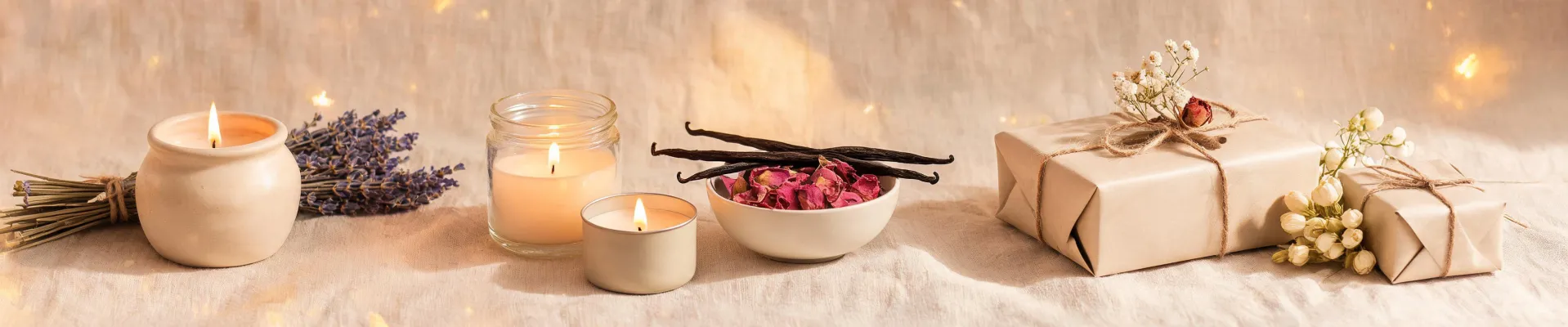
Here's a truth that took me four years and a $22,000 mistake to learn: there is no single 'best' promotional product. The perfect corporate gift depends entirely on your audience, your budget, and your objective. Yankee Candle is a powerful option, but it's not for every situation.
I'm a brand compliance manager. I review every promotional item before it reaches our clients—roughly 200+ unique items annually. I've rejected nearly 15% of first deliveries in 2024 due to spec mismatches or quality issues. And I've learned that the difference between a successful branded gift program and a costly failure often comes down to matching the product to the scenario.
So, let's break this down into three common B2B scenarios. Which one sounds like you?
Scenario A: The Mass-Produced Corporate Swag
You need 5,000+ units. Budget is tight. The goal is brand visibility, not perceived value.
Think trade show giveaways, employee welcome kits, or client appreciation mailers for a large list. The priority is quantity, low cost per unit, and easy shipping.
The recommendation: Look elsewhere.
I know, it sounds counterintuitive coming from someone who reviews Yankee Candle products. But for massive runs at the lowest possible price point, a Yankee Candle jar candle might not be the best fit. The unit cost, even at wholesale, will be higher than a branded pen, a custom koozie, or a generic 'luxury' soap. And the shipping weight? A single jar candle adds significant postage—something that kills a budget when you're sending 5,000 packages.
A better option for this scenario is a custom-branded item from a general promotional products distributor. Think a high-quality notebook, a reusable water bottle, or a branded tech accessory. The perceived value-to-cost ratio is often better for large volumes.
For a 5,000-unit run of a standard 10oz jar candle, you're looking at a wholesale cost of roughly $8-$12 per unit plus shipping. A comparable branded item from a general distributor might run $3-$6 per unit. The savings? $25,000 on the low end. That's real money.
Scenario B: The Premium, High-Impact Gift
You need 50-200 units. Budget is flexible. The goal is to impress and build a relationship.
These are your top-tier client gifts. Executive welcome packages. 'Thank you' gifts for a small but critical partner list. The perception of thoughtfulness is the metric. This is where Yankee Candle shines.
The recommendation: Yes, absolutely. But be strategic.
A single jar candle is nice. But a curated set? That's memorable. Consider a Yankee Candle gift set that includes a signature Large Jar (like 'Midsummer's Night' or 'Clean Cotton'), paired with a Reed Diffuser and a Car Jar air freshener. Bundle it in a custom-branded gift box or a nice tote. This isn't just a candle; it's an experience.
I once reviewed a program for a high-end law firm. They ordered 100 custom sets that included a Large Jar, a Votive Sampler Pack, and a personalized note. The candles were in custom-labeled boxes with the firm's logo. The client feedback was overwhelmingly positive. They were referencing it for months.
For a 100-unit run of a premium custom set (Large Jar + Diffuser + Car Jar), your wholesale cost is likely in the $40-$60 range per set. At $5,000-$6,000 total, you've invested in a gift that says 'we value this relationship more than a generic pen.'
In this scenario, you're leveraging the brand recognition of Yankee Candle. It's a known, trusted brand. Your client knows the quality. You're not buying a candle; you're buying a piece of a 50-year-old company with a specific fragrance heritage. That instantly adds a layer of value.
Scenario C: The Custom-Branded Item (The 'Sticky' Gift)
You need 500-2,000 units. Budget is mid-range. The goal is to create a daily-use item that keeps your brand top-of-mind.
This is the tricky middle ground. You want the quality of a premium gift but the practicality of a daily-use item. Things like custom-branded hand sanitizers, lip balms, or even a custom-labeled Yankee Candle Car Jar air freshener.
The recommendation: It depends on the item.
Yankee Candle offers custom imprinting on select items like Car Jars and some packaging. A custom-branded Car Jar is a fantastic, cost-effective option for this volume. It lives in the recipient's car, providing a constant, subtle brand reminder. It's a 'sticky' gift—it keeps working for weeks.
However, custom-branding a jar candle is more complex. You're not just adding a sticker; you're talking about custom labels, potentially custom boxes, and that drives up cost and lead time. For 1,000 units, it might not be worth the premium compared to a well-designed, custom-branded reusable bag or a high-quality notepad.
For a 1,000-unit run of custom-branded Car Jars, you're probably looking at $3-$5 per unit. For a similar volume of custom-labeled large jars? $15-$20 per unit. The difference in total cost is roughly $12,000. Is the 'jar' impression worth that extra cost for your audience? That's your call.
How to Know Which Scenario You're In
You've got the three scenarios. Now, how do you decide which one applies to you?
Answer these three questions:
- What's your core objective? Is it mass name recall (Scenario A), building a premium relationship (Scenario B), or daily brand reinforcement (Scenario C)?
- What's your budget per unit? Under $5? You're in Scenario A or potentially C with a cheaper item. $10-$20? Consider Scenario C. Over $40? You're in Scenario B territory.
- How much does perceived value matter? Is the gift for a one-time interaction (Scenario A) or a long-term, high-value client (Scenario B)?
Your answers should point you directly to one of the scenarios above. If you're still uncertain, err on the side of matching the gift to the relationship value, not the cost. A cheap gift to a valuable client can damage the relationship. A premium gift to a high-volume client is an investment that can pay for itself in retained goodwill. It's not always about the cheapest option; it's about the right fit. Simple as that.

Elise Laurent
Elise Laurent is a crystal and decorative glass quality analyst covering crystal figurines, vases, ornaments, suncatchers, and gift glassware. She examines ISO 6486-1 where food-contact glass dinnerware applies, then uses polarized strain inspection, dimensional checks, surface-defect grading, and refractive clarity to compare decorative pieces outside that scope. Her work helps sourcing teams choose materials, finishing routes, and protective packaging without confusing visual brilliance with verified durability.